


Marine Anchor

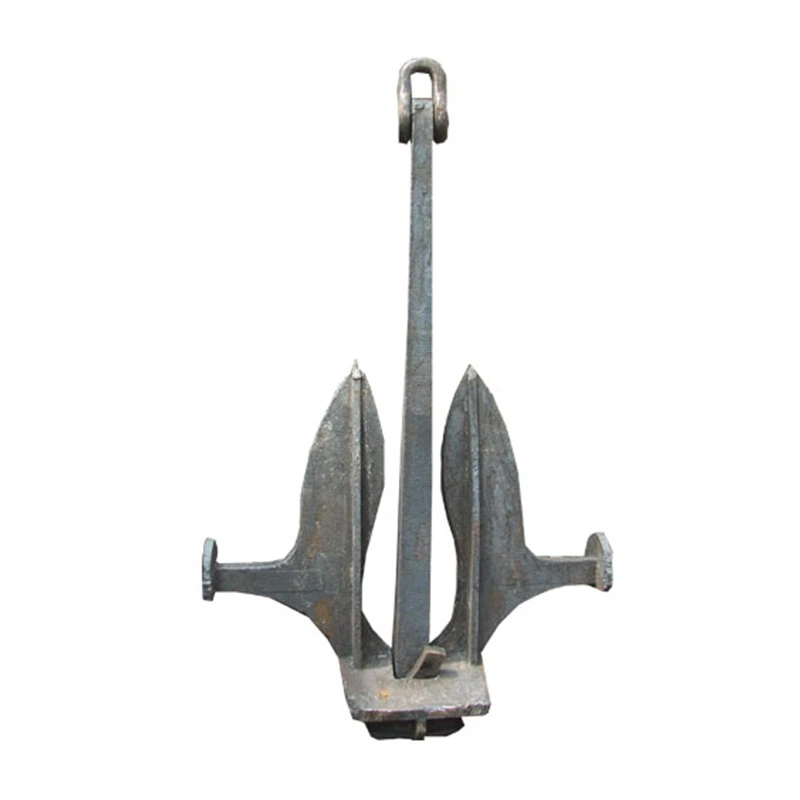


Your Professional Marine Anchor Supplier
Chongqing New Maritime Import & Export Co., Ltd. was established in 2018 and specializes as a professional manufacturer of ship parts. Our product range includes various marine outfitting equipment, life-saving products, propulsion systems, anchors and anchor chains, cables and wire ropes, floating dock systems, fenders, mooring equipment, and other related marine supplies.
Rich Experience
With over 24 years of extensive experience in both production and trade, the company has developed deep expertise in the marine industry.
Fast Delivery
The company operates three advanced production lines capable of handling large-scale orders while ensuring timely delivery.
Quality Control
The company is equipped with state-of-the-art testing facilities and adheres to a rigorous quality control system to ensure the highest standards of product quality.
Sales Market
Our products have gained widespread recognition globally and are currently exported to numerous countries, including Canada, the USA, Korea, Germany, India, Dubai, and many others.
Parameters
|
Nominal Weight/kg |
A/mm |
B/mm |
C/mm |
D/mm |
E/mm |
F/mm |
|
300 |
1200 |
960 |
1080 |
457 |
1380 |
45 |
|
750 |
1780 |
1400 |
1600 |
665 |
2110 |
510 |
|
1500 |
2250 |
1800 |
2024 |
840 |
2677 |
68 |
|
2500 |
2540 |
2030 |
2280 |
965 |
2880 |
82 |
|
4000 |
2975 |
2380 |
2650 |
1130 |
3395 |
100 |
|
6000 |
3450 |
2760 |
3060 |
1316 |
3923 |
110 |
|
8000 |
3730 |
2990 |
3360 |
1420 |
4300 |
130 |
|
12000 |
4300 |
3440 |
3942 |
1638 |
5017 |
145 |
|
15000 |
4845 |
3875 |
4355 |
1830 |
5513 |
150 |
|
18000 |
5140 |
4080 |
4610 |
1940 |
6080 |
160 |
|
20000 |
5330 |
4260 |
4790 |
2010 |
6310 |
170 |
|
25000 |
5740 |
4590 |
5160 |
2165 |
6532 |
195 |
|
40000 |
6715 |
5370 |
6036 |
2536 |
7948 |
210 |
|
60000 |
7690 |
6150 |
6910 |
2940 |
9100 |
240 |
|
70000 |
8095 |
6475 |
7275 |
3060 |
9580 |
250 |
|
85000 |
8625 |
6900 |
7750 |
3255 |
10210 |
265 |
|
95000 |
8960 |
7170 |
8055 |
3385 |
10610 |
280 |
|
100000 |
9110 |
7285 |
8190 |
3440 |
10780 |
280 |
Types of Marine Anchor
The marine anchors produced by our company mainly include the following types:
Plough (CQR) Anchor
Has a robust structure reminiscent of a farm plough, ideal for penetrating varied marine bottoms.
Advantages: Excellent retention power, easily reorients with changes in wind or current direction.
Disadvantages: Can be heavy and difficult to store due to its shape and size.
Recommended use: Larger boats that require secure anchoring in different types of bottoms, including mud, sand, and gravel.
Danforth Anchor
Has large “flukes” that provide good penetration in soft bottoms like mud or sand.
Advantages: Light compared to its holding power and easy to store.
Disadvantages: Reduced performance in rocky or very hard bottoms.
Recommended use: Ldeal for small to medium-sized vessels and use in sandy or muddy bottoms.
Bruce or Claw Anchor
The claw shape allows the anchor to grip well in most bottoms.
Advantages: Good overall performance and very stable, rarely dislodges.
Disadvantages: Not the best in weedy or very hard bottoms.
Recommended use: Vessels operating in areas with varied bottoms and where constant reorientation of the anchor is required.
Mushroom Anchor
Its mushroom shape allows it to bury in soft bottoms.
Advantages: Ldeal for permanent anchoring.
Disadvantages: Lneffective in hard or rocky bottoms, and impractical for temporary use.
Recommended use: Fixing buoys and in situations where the boat remains in a fixed location, such as lakes or protected bays.
Marine Anchor Material
Steel:
Steel anchors are popular for their strength and durability. They are commonly made from high-tensile steel and are suitable for use in a wide range of marine environments.

Aluminum:
Aluminum anchors are lightweight and corrosion-resistant, making them a good choice for smaller boats or vessels that require frequent anchoring.
Cast iron:
Cast iron anchors are durable and cost-effective, making them a popular choice for larger vessels.
Bronze:
Bronze anchors are strong and resistant to corrosion, but are more expensive than other materials.
Composite materials:
Some modern anchors are made from composite materials, such as carbon fiber or Kevlar, which offer high strength and corrosion resistance while also being lightweight.
The Method of Anchoring Marine Anchor
Anchoring from the bow of the ship
There are two types of ship’s bow anchored: single anchor and double anchor. Under normal circumstances, a single anchor can be used to fasten the ship, and only double anchors can be thrown when the wind and waves are particularly strong and the anchorage is narrow. When anchoring from the bow of the ship, the hull receives the least external forces such as wind force, current force and wave impact force, so this method is the main method of anchoring and mooring, and it is also the main reason why the main anchor is arranged in the bow of the ship.
Anchoring from the stern of the ship
Anchoring from the stern is mostly used for inland watercraft and landing craft. When the inland river vessel sails downstream and anchors downstream, in order to ensure safety and avoid turning around, the stern anchor is often used. In the operation of landing ships and retreating from the beach, with the cooperation of the main engine, the ship on the beach was pulled down the beach by the pulling force of the windlass.


Anchoring from the ship side
When the ship is in a berthing condition where the water flow or wind direction is perpendicular to the centerline or at a certain angle, anchoring from the ship side can facilitate ventilation and disinfection or enable the ship to load and unload cargo on the leeward side, or perform other operations.
Anchoring from the bow and stern
If you want to make the anchored ship always use the ship’s side and face the wind direction, then use the method of anchoring bow and stern. This method is generally to throw the main anchor from the direction of the wind, from the stern, pass a cable around the outboard of the ship and connect it with the thrown-out main anchor chain, and then release some main anchor chains.
Precautions for Using Marine Anchors
For anchors to work, the most basic condition is to hook things on the bottom of the sea. If the anchor chain is not long enough, the anchor will not work. If the seabed is flat, or the thing the anchor is hooked on is not fixed, or the hook is not very strong, if it is calm and the sea is still okay, once the waves are too large, the anchor can’t catch things and the anchor will lose its function. This is called anchoring. It is very dangerous when the ship is anchored, because the main engine usually stops when the ship is anchored. If the ship is started immediately, it takes time, and it is very dangerous for a ship without power to drift around. . Therefore, the concept of anchorages came into being. Anchorages meant that the bottom of the sea was relatively rough. In addition, they had to be sheltered from the wind.
Anchor chain is the part that guarantees that the ship can stand still on the water surface. If the ship wants to stand still in the current, it must rely on the anchor in the water to hold ship. Weight, so there are rules for how big a ship is and how big an anchor is. This is due to the holding force that the anchor can produce and its own inertial force, and the friction force of the anchor chain also plays a certain role.
Looking from the top of the ship, the anchor chain is straight, but there is a section of it under water that is close to the seabed (in fact, it is close to the seabed). The anchor provides the holding force, which is then transmitted to the ship through the anchor chain, thereby resisting the influence of the external load of the sea current and wind and waves on the positioning. The reason why there is a section close to the bottom of the sea is to take into account the influence of the force. Think about it, an anchor, the anchor chain is easy to move when pulled straight; and there is a section close to the bottom of the sea, which can provide a margin, which is possible within a certain range.
Packaging and Shipping
|
Packaging |
Plastic film |
|
Shipping |
We work with professional logistics partners to choose the best shipping option, whether it's by sea, land, or air. For international orders, we handle all the export paperwork. |
Chongqing New Maritime Import&Export Co., Ltd. was established in 2018, which is a professional ship parts manufacturer. New Maritime has won mature production line and and also well experienced foreign trade branch-company with head office located in the developed city of Chongqing.

Our Certifications

FAQ