

Hey there! I'm a supplier of liferafts, and I've always been super into the history of these life - saving devices. It's wild to think about how far they've come over the years.
Let's start way back in the day. The concept of a floating device to save people from water emergencies isn't new. Ancient civilizations, like the Egyptians and Greeks, had some basic ideas. They used things like logs tied together or animal skins filled with air to stay afloat. These were the very first steps towards what we now know as liferafts.
Fast forward to the 19th century, and things started getting a bit more sophisticated. With the growth of shipping and maritime trade, there was a real need for better safety equipment. The first proper liferafts were made of wood and canvas. They were heavy and not very easy to handle, but they were a huge improvement over the earlier makeshift floating devices.
In the early 20th century, the invention of rubber changed everything. Rubber - coated fabrics made liferafts lighter, more flexible, and easier to store. This was a game - changer. The inflatable liferaft was born. Instead of being a solid, bulky structure, these new rafts could be deflated and packed into a much smaller space. This made them much more practical for ships of all sizes.
During World War I and World War II, liferafts became even more important. Thousands of sailors and airmen found themselves in the water due to ship sinkings and plane crashes. The military invested a lot in improving liferaft technology. They added features like emergency supplies, such as food, water, and first - aid kits. The design also got better, with more stable shapes and stronger materials to withstand the harsh conditions of the open sea.
After the wars, the civilian maritime industry continued to build on these military advancements. Safety regulations became stricter, and liferafts had to meet certain standards. Manufacturers started using new materials like neoprene and polyurethane, which were even more durable and resistant to the elements.
Now, let's talk about the different types of liferafts available today. One of the popular types is the Davit Launched Inflatable Liferaft. These are usually used on larger ships. They're attached to a davit system, which is a mechanical device that can lower the raft into the water. This type of liferaft is great because it can carry a large number of people, and it's relatively easy to deploy in an emergency.
Another type is the Throw Overboard Liferaft. As the name suggests, these rafts can be simply thrown over the side of a ship. They're designed to be quickly deployed in an emergency, even when there's no time to use a davit system. They're often used on smaller boats and yachts.
There's also the Throw Overboard Inflatable Liferaft. This is similar to the throw - overboard liferaft but is inflatable. It's lightweight and easy to store, making it a popular choice for recreational boaters.
In addition to the basic design, modern liferafts come with a whole bunch of high - tech features. Many have automatic inflation systems that activate as soon as the raft hits the water. Some even have GPS tracking devices, so rescue teams can easily find the people in the raft. There are also reflective materials on the outside of the raft, which makes it more visible at night or in low - light conditions.
As a liferaft supplier, I've seen firsthand how important these advancements are. Every year, there are countless stories of people being saved because they had a reliable liferaft. Whether it's a small fishing boat in a storm or a large cruise ship in trouble, a good liferaft can mean the difference between life and death.
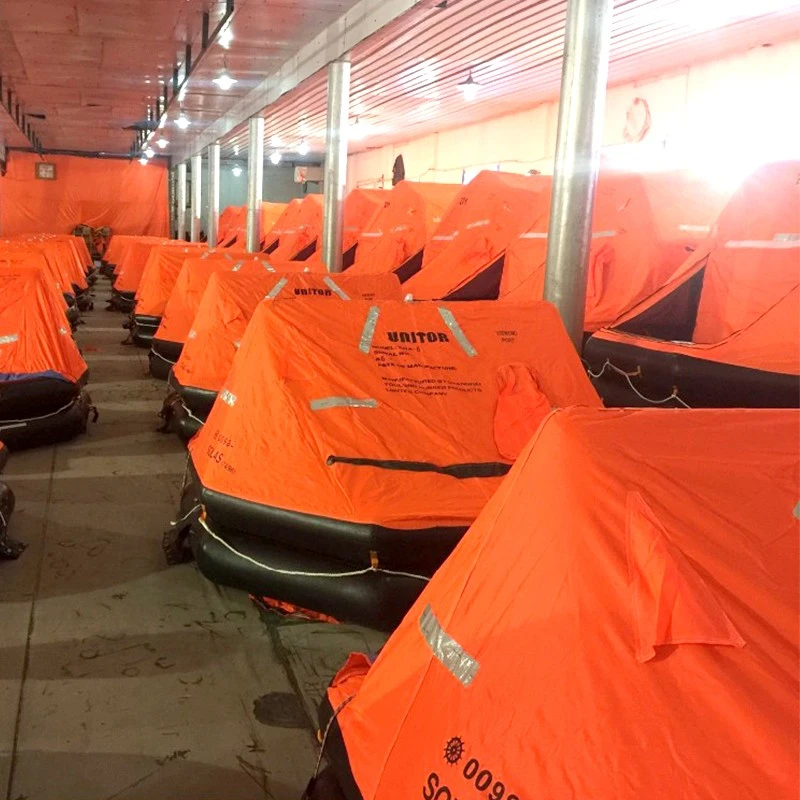

If you're in the market for a liferaft, whether it's for a commercial vessel or a personal boat, I'd love to talk to you. I can help you find the right type of liferaft for your needs, based on the size of your vessel, the number of people on board, and the type of waters you'll be sailing in. Contact me, and we can start a discussion about getting you the best liferaft solution.
References
- Maritime Safety History Books
- Industry Reports on Liferaft Development
- Military Records on Liferaft Use During Wars


